Friday, September 24, 2010

Brief Impressions: F1 2010

When it comes to a first attempt at something, most games play the safe card and try to provide the most serviceable, coherent experience possible, letting future sequels -- if successful -- take care of necessary refinement and new additions. These games nail the core experience but do so without the bells and whistles, all in an attempt to prove that they can achieve what was intended. Race Pro, way back at the beginning of 2009, is a great example of this: its driving model is almost on par with the likes of Forza and Gran Turismo; its car selection and track variety decent enough to be enjoyable but nothing spectacular; and its impact on the market subtle but significant.

F1 2010, the newly released game based on the current Formula 1 season, is a game that should do as described above: it should be a decent enough first attempt that isn’t amazing, but is alluring for those interested in the sport, its spectacle or just racing games in general. Instead, F1 2010 is quite possibly one of the best racing games I have played in a long time, and this is after just a few hours with it.

Before I get into why it is so amazing, let me quickly explain its status within the market. F1 2010 is not the most beautiful racing game around but its visuals are solid. The expected mundane appearance of most tracks (as in real life) means that for the most part, everything looks decent but the reality is, when you’re playing the game proper it is something you are not going to notice. Anything that may stand out visually -- birds flying above you, a nearby lake, etc. -- is largely ignored as you hurtle on by and focus on what you need to be doing. Character models -- what few there are -- are average at best and animation is adequate but inconsistent. Aurally, the soundtrack is minimal (though the inclusion of Pendulum is welcome) and the voice acting is moderate. That’s a good thing though given that the engine note of a Formula 1 car is a better tune to be listening to anyway, and it’s here that the game does a pretty remarkable job. Everything from the different rev ranges an F1 car can hit to the sounds of the other cars as they race at different points of a track, drive down the pit lane or change gears too late and over rev the car, is featured in the game, the sound playing an integral part in forming the experience. Lastly, the physics engine is astonishing for a first attempt, but perhaps not as nuanced as something like Forza.

It doesn’t have to be, though. Why? Because driving a Formula 1 vehicle is unique and certainly isn’t like driving anything found in that game, or its closest rivals. The best thing I have enjoyed about the game so far is how nicely Codemasters have nailed everything that I have heard, everything I knew from watching the sport for years, with their physics engine. Things like how an F1 car becomes easier to turn, easier to steer, the faster it is going; or how late you can brake into a corner, still hit the apex and accelerate out of it early, all in a matter of seconds and yet still smoothly and efficiently. Gas up the car too early out of a corner and you’ll spin out; accelerate too slowly and you don’t get to take full advantage of the car’s power, force and speed. Enter a corner casually and you take it slowly -- despite being cautious -- because the tires aren’t running at their maximum grip levels; enter it too fast and you’ll meet the grass, the gravel or worse, the barrier, hampering your progress if not halting it completely. Racing in this game and indeed, the sport in general, is a different beast to most other forms of racing or racing games and it shows. Your approach needs to be different, your mind needs to consider completely different things than you may expect, and your consistency? That needs to be earned, not delivered, through practice, understanding and confidence.

More amazing, potentially, is how faithful the game’s atmosphere is. The first time I drove out of my pit garage I had a giant grin on my face. Not because I was playing an F1 game, not because I was driving on a track I hadn’t done so before, and not because this was a new game -- I had a smile because instantly, at that very moment, I felt like I was in Formula 1 and that’s the kind of thing that can’t be replicated easily. The tracks looked like they do on TV, with the width, barrier placement and general aesthetic of the locations (I’ve tried so far, at least) seeming like an exact replica; the sound of my car bouncing off the walls as I sped past was exactly as I imagined it would sound were I in the cockpit in real life; and as explained above the feel was unbelievable. Throw in the 23 other vehicles and I was -- as a Motorsport fanatic in real life -- in heaven. The AI seems to be quite good (this is on the hardest difficulty setting) and their approach to the various sessions seems to mimic those seen in real life, exactly as it should be. In Practice they take short stints, exiting the pits for a couple laps before returning, running at a reasonably fast pace but nowhere near maximum and backing off or moving to the side if you are near. In Qualifying they go for the three lap stint I’ve explained before, using the first lap to get warmed up and prepared to set a flying lap, the second to achieve their lap time and the third to either calm down again to return to the pits, or have another attempt at a time. And in races, they duck and weave as they try to get past, slipstream behind you to gain a slight speed advantage and take risky dives down the inside. They also make mistakes such as dipping a wheel in the grass or going too wide around a corner, meaning that they are competitive but not unbeatable. When you consider that this all occurs with a great sense of speed that is really intense and requires a lot of concentration (more on this soon), you have a game that can really take you for a ride, should you let it, and the end result can leave you exhausted. But you know what? It’s all worth it, because if you put the effort in you will be rewarded with a game that doesn’t just simulate Formula 1 superbly, it gives you a racing experience that is arguably unmatched.

High praises to be sure but entirely justified. Codemasters haven’t just brought us an F1 game; they’ve delivered the F1 experience. There can be no better use of a licence than that.

Monday, September 20, 2010

Preview Power: Formula 1 2010

[Part of a series of smaller posts that I'll be doing about various upcoming games. I don't jump on board the hype train too often, but when I do I like to think that there's a pretty significant reason for why, and in this series I will attempt to explain my anticipation for each game.]

F1 2010, the newest Formula 1 game (the last being released early in the PlayStation 3's life cycle) from racing game experts Codemasters is perhaps a strange title to be excited for, its limited offerings seemingly nowhere near as exciting nor important as other, bigger and more well-known games like the just released Halo: Reach, or something like Mafia II or Metroid: Other M. But then, this is me we are talking about here, an avid Motorsport enthusiast who absolutely adores Formula 1 in real life. My love for all things racing has been documented here before -- that won't stop any time soon -- but despite that, there's something different about this F1 game, something that I'm eager to get my hands on later this week.

I'm excited about it because, well, it will be the first Formula 1 game I have played in over a decade. Yes, despite reasonably frequent releases whilst Sony held the licence, I haven't played an F1 game since the Nintendo 64 days, with F-1 World Grand Prix II the last title to satisfy my F1 needs. Such a long time between drinks has been a product of circumstance, with finances preventing me from access to more recent titles, and Sony's ownership of the licence restricting not only games based on the sport to their platforms, but competition from entering the marketplace, particularly on the other consoles. Their exclusivity rights is understandable and I don't feel any disappointment towards them for holding the licence for so long, but it did mean an even more limited audience than the niche licence already attains, particularly with the PS3 release as it came at a time when the PS3 was struggling to find its feet. Having the licence obtained by Codemasters -- a multiplatform developer -- was wonderful news not just because it meant I could play an F1 game again (I own all three consoles now anyway so I wouldn't have missed out anyway) but because it opens the potential userbase for the game, an enticing prospect for a sport that is, while largely considered as the pinnacle of Motorsport, a restrictive brand. Motorsport is incredibly popular on a general, global scale but in the context of Formula 1 alone the potential for success is varied. In Europe and Australasia, Formula 1 is massively popular but in North America, the sport has always had limited appeal and it would be very easy to argue that the majority of Americans don't even know about the sport. Factor in that, as a game, one of F1 2010's biggest markets could be (has to be?) America and you have an intriguing issue pop up: will the game see some success over there?

On a personal level, I'm excited for the game because of the different breed of racing that it will provide. Instead of big, heavy sedans and touring cars that are found in most racing games -- rally games, Nascar, Forza Motorsport and Gran Turismo, etc. -- Formula 1's vehicles are open-wheeled, extremely close to the ground, fragile instruments, and they rely on technical performance as much as, if not more than driver skill. This key difference will require a different approach to playing a racing game, as braking points and cornering speeds will be quite different to what I am used to. I've played previous F1 games and others that feature open-wheeled cars, but as a simulation F1 2010 may take some getting used to -- a challenge I embrace with open arms. I actually look forward to pushing the absolute limit of a braking point, braking at the absolute last second and still entering the corner perfectly. Likewise, I'm eager to push the cornering limit by finding the ideal places to accelerate early (but not too much lest I spin the wheels and lose control), taking advantage of a Formula 1 car's technical grip to assist my precision and accuracy rather than judicial use of the accelerator as in most other circuit based racing games. It might not sound exciting or something worth caring about, but for someone who has a mentality like drivers do, the change of pace will scratch an itch that has been with me for years.

As far as the actual game is concerned, I'm quite happy to see a dynamic weather system that sounds like it will be unpredictable. As most racing games rely on scripted weather instead -- this race is going to be sunny, that one rainy -- the execution of this could go either way, but I remain optimistic until I see it in action. Even if it isn't well done, just driving in the wet -- also something rarely seen in other games -- is an enticing enough feature to hold my interest, the dynamics a wet track will add to a race hopefully making way for some engrossing moments. Participating in practise and qualifying events will also be nice, the focus of performing over an entire race weekend a nice contrast to the 3-lap, singular affairs that I'm used to. Last but not least, I'm just looking forward to racing on some tracks that I either haven't been able to for years, or have never raced on before. It may only be a small thing but the different tracks will provide some variety that I've lacked in recent years, racing on the same bunch of tracks that have become common in other recent titles.

Overall, I'm excited to play F1 2010 for exactly that: it's a game about Formula 1, in 2010 -- not only does it have the potential to simulate some of my favourite elements from the real sport, it allows me to continue to revel in what has easily been the best season of Formula 1 I have ever seen.

Bring it on.

Friday, September 17, 2010

Timeless

They say a picture tells a thousand words. If that’s the case then what do the following images have to say?

Donkey Kong Country (SNES)


Oddworld: Abe's Odyssey (PlayStation)


Super Mario 64 (Nintendo 64)


Rez (Dreamcast)


Shadow Of The Colossus (PlayStation 2)


Halo: Combat Evolved (Xbox)


The Legend Of Zelda: Wind Waker (GameCube)


BioShock (Xbox 360)


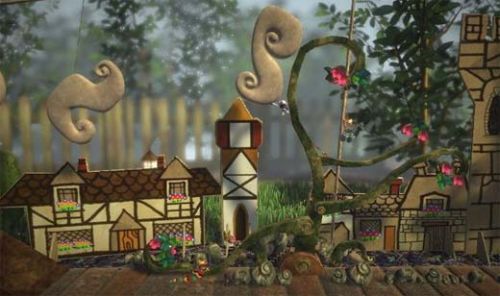
LittleBigPlanet (PlayStation 3)


Wii Sports (Wii)


Limbo (Xbox Live Arcade)


PixelJunk Eden (PlayStation Network)


LostWinds (WiiWare)


Portal (PC)


Spectacular.

Wednesday, September 1, 2010

Weapon Overload

Like it or not, guns are a significant part of the medium of videogames, as are other weapons like swords and hammers. As a result, fighting, combat and gunplay are also prevalent, allowing anyone and everyone the ability to enact violence and experience gore in the comfort of their own home. It has already been discussed at length as to whether this is a good thing or not, and whether such content in games has a strong impact on those who play them, but that’s not the issue I’m concerned with here. Instead, I’m concerned by the glorification and general “killing is cool” ideology that exists as a result of the oversaturated genre of first-person shooters, as well as brawlers and any other game that uses combat in any shape or form as a main mechanic. Allow me to explain.

Those of you who have been reading my blog for a while may remember that earlier in the year, I was playing through Yakuza on the PS2. I firmly intended to play it in its entirety, to see what kind of story the game would tell me, whether I’d be interested in the cultural elements it portrays, and the way it used Tokyo as its game space. At first, I found the game to be quite compelling, the story piquing my interest for a variety of reasons while exploring Tokyo was also great fun. I was even surprised by the accessibility and complexity of the combat, enjoying the fisticuff fighting a lot more than I expected. But that enjoyment didn’t last long and, once I realised that practically all I was doing in the game was fighting over and over again, I quickly found myself exhausted by the constant combat and disappointed each and every time a new fight began. The game is a brawler to be sure, but from what I had heard and saw it seemed like so much more than that. Of course, being a game focused on the Yakuza you expect violence to play an integral part, but I also expected a lot more given the emphasis on detail and atmosphere, not to mention the game’s generally positive reception both in Japan and abroad. The combat itself was fine -- as I said, I actually found it to be quite enjoyable -- but the repetition of each fight and the frequency with which they occurred -- it felt like every thirty seconds or so I was in a new one, the notion of simply walking down the street taking far longer than I believed it should -- grated, and the end result is an unfinished game that I am reluctant to return to because I know what awaits.

This combat fatigue isn’t Yakuza’s fault, necessarily; the fact that nearly every single game I play features combat of some sort -- be it by using weapons or shooting various guns -- has culminated in an exhaustion that I don’t think I can recover from any time soon. I mean, it’s obvious when you play a first-person shooter that you will be shooting things the majority of the time, but when it exists in my open-world games (Red Dead Redemption; GTA IV), my narrative focused games (Alan Wake; Heavy Rain) and even games centralized around Parkour (Mirror’s Edge; even Assassin’s Creed), you know there is something wrong. Why is the industry so obsessed with shooting, fighting and with violence? Why must games that have nothing to do with murder or melee contain weapons or the ability to inflict pain upon those you come across in your travels? Why does a game about Parkour even have useable guns in the first place?

It seems silly but really, it’s not surprising. Shooting things (particularly in the face) is fun, as is the ability to punch someone with a brute force that we just can’t imagine in the reality of our own lives. The violence we get to inflict upon our foes or even friends (in the case of multiplayer) -- sadistic or otherwise -- is extremely satisfying, and more importantly, it’s empowering. Part of the appeal of playing games is the fact that they can take us to places we can’t visit in real life, and allow us to do activities that are either impossible or unlikely. When faced against insurmountable odds, a few button pushes here and a well-timed reaction there can immediately give us the upper-hand, changing up the odds and pace of the gameplay and motivating us to keep on fighting back through adrenalin and intensity, not stopping until we are triumphant and subsequently rewarded with a new weapon, ability, item or just the fact that we defeated our enemies. This reliance on combat and the violence that stems from it is understandable, not just because of its ability to entertain us with fun situations but also because it’s a mechanic that is accessible, exciting and something the medium as a whole has experience with. From Wolfenstein 3D and Doom right up to the imminent Halo: Reach and Call Of Duty: Black Ops, we have been shooting things, and our ability to make the ideal headshot is something that has been refined and reformed with each and every game in between. Likewise, we’ve been punching and kicking our way through classics like Final Fight and Double Dragon up to modern titles like Tekken and Soul Calibur, perfecting our combos and maneuvers along the way.

Like it or not violence is here to stay in videogames and so it should, but while the aggressive and brutal actions may have their place, the glorification and endless justifications for it do not, as exemplified by GamePro’s recent “Shooter issue”, and Kotaku’s “gun week” currently taking place. The timing is poignant: the start of September means the start of the silly Christmas rush period the industry has each year and as a consequence of that, it means we also enter shooter season. It’s a time where all the big boys release their key franchise installments, and the aforementioned Halo and Call Of Duty titles are leading the charge. Each game will be vying to steal every consumer dollar possible, and somewhat ironically these titles will be fighting for the attention of the masses, hopefully at the expense of the competition. But I digress.

By centering a body of content -- in GamePro’s case an entire issue* and in Kotaku’s, a decently sized chunk of their posts this week -- around shooting games and the guns that we use within, the genre and thus the violence it revels in is emphasized, highlighted as something significant and more important than, say, the themes or morals trying to be explored. It implies that killing and the way in which we do it is to be celebrated, to be underlined as a crucial part of videogames, and that nothing else matters. It glorifies the act by suggesting that it’s worthy of our unabashed praise and reverence, and suggests to observers that the medium really is as juvenile as it is oft-claimed to be. And therein lies the problem: viewed from the outside, this lavish tribute and admiration is overwhelming and misleads the uninformed into believing that all we as gamers care about is our ability -- our right -- to shoot things in the face. It reflects on our medium by creating the perception that it’s juvenile, and it reflects on us by reinforcing the notion that people who play games are kids -- young, predominantly male teenagers who take immense pleasure in the violence, gore and absurdity -- when, in reality, this just isn’t true. Most unfortunate of all, it says to everyone who hasn’t played a videogame or doesn’t understand what all the fuss is about that we are immature, and that we are just not interested in spending our time with anything more meaningful than the amount of enemies we’ve killed, and the remaining bullets we have left in our guns.

While it’s true that gaming is only in its adolescence, the progress it has made over the years, particularly recently, has been amazing. We have gone beyond violence for the sake of violence, shooting for the sake of shooting, and we will continue to advance as we continue to explore not only the possibilities of the medium, but the potential that each game has to take us to unknown places and to do unforeseen things. It’s not about the perfect headshot or the sheer brutality of our kill anymore; it’s about the limitless freedom that can be gained from the fact that unlike other mediums, we’re not passive: we don’t just hear or see, we do, and that’s a power with force stronger than any violent punch or kick can achieve.

We wonder all the time why so many people don’t understand us and our favourite hobby, and we’re confused when we see yet another strange misconception about the medium, but really, when our own media decides to celebrate guns, shooters and combat instead of report on more important, more meaningful matters, we only have ourselves -- as a unified industry -- to blame. And so, as Kotaku’s gun week continues and gamers the world over mark the beginning of shooter season as they prepare for Halo: Reach’s imminent release, I sit back and wonder: is this just a gun club I forgot to sign up to, or are the bullets of progression yet to be fired?

*Note: I haven’t actually read the issue, living in Australia and all, so I’m unaware of what actually resides within.

Wednesday, August 25, 2010

Preview Power: Metroid: Other M

[Part of a series of smaller posts that I'll be doing about various upcoming games. I don't jump on board the hype train too often, but when I do I like to think that there's a pretty significant reason for why, and in this series I will attempt to explain my anticipation for each game.]

I absolutely love the Metroid series. It's easily one of my favourite franchises in gaming and I'm not afraid to admit that I prefer it to the more popular, more renowned franchises of Mario and Zelda. If you asked me why I loved the franchise, I'd respond with a reference to the exploration, a nod to the atmosphere, and a suggestion that isolation is one of the defining features of each game. I'd tell you about how Samus Aran inspires me: to play each game to the best of my ability; to get her through any and all situations she finds herself in, good or bad; and to ensure that no matter what, our perseverance will prevail. I'd also go on about how Metroid Prime is my favourite game ever and that nothing else, not even BioShock (think about that one for a second...) comes close to the love I have for that game. The Metroid franchise commands my respect but, more importantly, earns it from every single person who joins its loyal fanbase. It might not have the reputation that Mario does, or the sense of wonder that can be found in every Zelda title, but Metroid is a unique, wonderful take on science fiction that simply resonates with me.

It should be no surprise, then, that Metroid: Other M is high on my anticipated list. Here is a game that has a lot riding on it: like Metroid Prime before it, it's doing something new with the franchise, providing a different perspective that could be absolutely excellent, or a dismal failure; it's being made by Team Ninja, a development team that has a mixed reputation and who certainly don't have the respect that Retro Studios earned over the course of their fabulous Prime trilogy; and it appears to be emphasising things that usually take a more subdued focus in the series, such as narrative and action. The action focus is no surprise -- this is, after all, a game coming from the team behind Ninja Gaiden and Dead Or Alive -- but the narrative? That's something that, arguably, Team Ninja don't have much experience in and, as such, it's very easy to be skeptical.

Skepticism and hesitation surrounds the impending game and for good reason. Story in a Metroid game is usually discovered, the lore of the game's universe and exposition on everything ranging from the Space Pirates to the various species (enemies) you come across in your travels something to be found rather than told. Sometimes, story barely even exists, with just enough portrayed to set up a game and nothing more. In these instances, it's the atmosphere, discoveries -- ability upgrades; bosses -- and exploration that make up the plot of the game, leaving it all up for interpretation and in the hands of a player's imagination. Either way, both have defined the Metroid franchise since its inception and therefore a stronger focus on narrative, with cutscenes and conversations with other people, is cause for concern. Personally I don't have an issue with this and actually hold it as one of my reasons to be excited. While part of the fun of playing Metroid was finding out things at my discretion, finding out more about the Metroid universe and Samus Aran in particular is an enticing prospect, her history and experiences something I want to learn more about. It will be different to previous games, it will take some getting used to and, presumably, such a change will feel abrupt at first, but I'm willing to give Metroid: Other M a chance because I want to give Samus a chance: to tell her story and to make us understand why she is who she is, why she does what she does, and what the things in her past mean to both her and to us.

The action is also something I can embrace, so long as it isn't over done and doesn't come at the expense of the exploration and atmosphere the series is synonymous with. Boss battles are a core element of the franchise and so I'm willing to explore new combat options that may arise from the different perspective Other M will provide. Admittedly I can't actually get a grasp on just how the new game will play -- even after watching gameplay footage -- so it's hard to know where I will stand with it, but for now I am willing to give it the benefit of the doubt and approach it on its terms rather than any of my own.

All in all, as a self-confessed Metroid fanboy I can't not be excited about Metroid: Other M, but beyond that I am genuinely interested in it due to the changes it brings. The formula is nowhere near going stale, but that doesn't mean it can't be repackaged in a way that refreshes the franchise and, hopefully, brings in a new audience with it. The science has been perfected over the years. Now it's time for the fiction to get the same loving treatment. Here's hoping, anyway.

Monday, August 23, 2010

Silent But Deadly

Resident Evil 5 is a controversial entry in the long-running franchise, dividing its audience by iterating on the fabulous additions its predecessor Resident Evil 4 brought to the table whilst also taking the series in a direction that is a far cry from its original roots. Action and spectacle are the order of the day, leaving scares and a general feeling of eeriness by the wayside. Co-operative play was the game’s central focus, and while what that means is the subject for another post, the end result is a fun, impressive installment in the franchise that just isn’t scary, period -- not a criticism in its own right, but when considered alongside the franchise’s history, it is definitely something worth contemplating.

Contrast and compare this with Alan Wake -- a game which I’ll have more about soon -- and its emphasis on atmosphere and ambience to create an eerie, uneasy experience where you never know what to expect, what will happen and, more importantly, when. Alan Wake’s model is the more commonly seen amongst today’s supposedly scary games, the genre’s reliance on atmosphere in particular reaching varying degrees of success. This is the model that Resident Evil established itself on, and while that series used cheap “Boo!” scares to scare its players, it still paved the way for games like Alan Wake. Both Resident Evil 5 and Alan Wake are loud games, then, in that there’s always a haunting score or chilling sound effect to be heard, and disturbing, omnipresent darkness or growling, menacing enemies to fight. The moments of silence are quickly punctuated by the sounds of the unknown, and the vividly black darkness soon gives way to sudden bursts of light, usually at the same time as an enemy overwhelms you with its attacks. It’s visceral, it’s definitely immersive, but it’s a model that is arguably overdone and loses its impact over time. Something less frequent than loud, moody survival horror games are titles that use silence to create their tone, and cleverly placed aural and visual assets to achieve moments of uncertainty: moments of fear.

I’ve been playing an absolute legend in videogame history recently, its re-release on the Xbox Live Arcade allowing me to finally experience the game fully rather than in short, minimal bursts. Doom II is one of the grandfathers of the first-person shooting genre, its classic status deserved for a multitude of reasons ranging from its impeccable level design to the stupid fun that can be had with its double-barreled shotgun. One element of the game was an unexpected surprise, however, something that I couldn’t get a decent grasp of back when I played it at school or at friends’ houses; Doom II is bloody scary, so much so that I’d argue it is more creepy and daunting than any of the games we see released today. It was scary for the players who got to experience it back in its heyday, and it is scary now, in 2010, when technology’s incredible progress means that the game should have been surpassed years ago.

But it is not scary in the traditional sense, the horror that we normally associate with the Resident Evils and Silent Hills of the world. Instead of haunting sounds and disturbing imagery, Doom II is violent and distinctly alien, the endless onslaught of Cyberdemons and Imps keeping things fast, frantic and inherently fun. Yet, I would argue, the game is the complete opposite of the slow-burn scares of more recognized survival horror games: it might be fast, it might be furious, but it’s also silent and that simple fact makes it far more creepier, freakier and terrifying than any zombie, monster or creature found in a more common horror game.

Silence is something I think is overlooked in the videogame industry and it’s somewhat ironic that a game that was released years ago exemplifies why it should be used more often. When you play Doom II, you do it because you want to shoot some aliens using some pretty damn awesome weaponry, but as you do you enter a world where the mere sound of an Imp that you can’t see; the sudden roar of a Cacodemon as he edges ever closer to you; or the punctuating sound of a Zombieman’s gunfire, gets to you, putting you on the edge of your seat and instilling an overwhelming sense of fear inside you.

Another game achieves a similar result, but again for different reasons. Instead of the lingering atmosphere of the typical survival horror, or the imposing dread of Doom II, Limbo is scary because it is weird; frightening because it is strange; and irrevocably eerie because it is brutally sadistic. Taking full advantage of a minimal presentation and design, and creating its own unique atmosphere through its clever use of silence, Limbo uses things like the harsh reality of death and pensive misery to convey its horror. It’s a game that has more in common with someone’s fear of spiders than it does their fear of an unknown and violent, monstrous enemy; it uses real life objects we take for granted like electricity and elevators to send chills more disturbing than the sight of a beheaded alien down our spines, and it uses the monotonous sounds of baby birds chirping and water dripping to give life to an otherwise dead and gloomy environment. It’s more harrowing than it is horrific; more morbid than malevolent; and more gothic than gruesome, but it’s still just as peculiar and alarming as the best of them, and it achieves its terror through a use of silence that is more black than golden.

But really, that’s little surprise. Death should be the scariest prospect of them all and by reveling in it, Limbo, Doom II and other games like them communicate a sense of fear as effective -- if not more so -- than the omnipresent and overwhelming atmosphere that most horror games provide these days. Loud and proud or silent and sinister -- both have their place and both have amazing power when it comes to making a player hesitate. It’s just a shame the two see such a vast difference in popularity.

Saturday, August 14, 2010

Columbian Shift

It has been four years since we last heard from Irrational Games, and while their name may have changed twice since then, their ability to capture an audience and design games that get people thinking certainly has not: BioShock Infinite was announced on Thursday and immediately afterwards gaming websites and places like Twitter went into overdrive, going crazy over the news. And for good reason, too: on name alone there’s reason to be excited, as the BioShock franchise has established itself as one to watch and one that explores some really intriguing, incredible themes, but beyond that it’s a new game from Irrational, creators of the original BioShock and many other great games -- whatever they’re working on next is something to keep an eye on. But with BioShock Infinite, there’s more to contemplate than the obvious pedigree of what has come before. Here are just some of the thoughts that went through my mind after the announcement.

First and foremost: the new city. At first glance, Columbia -- a city in the sky -- looks amazing, delivering a completely different vibe to the murky depths and neon-flavour of Rapture, and exhibiting a vibrant display of colour that is punctuated by the American flag, its colours and indeed, the stars and stripes. Clearly then, this new city has an American flavor that Rapture did not, and on that merit alone it’s interesting to ponder just what that might mean for this new game. Even its name is rife with implication. Beyond that, the notion that there’s a floating city in the sky, above the land of real world locations that were only ever briefly mentioned in the depths of Rapture, is an enticing prospect. As soon as I saw it my mind was doing two things: sitting there in awe at what I was seeing, and then racing in a multitude of directions about what it means for its design -- and thus, the design of the game’s levels -- and also for its gameplay. By not showing any actual game footage, it’s unclear just what we will be doing in this new game and while it’d be easy to assume that the mechanics and dynamics will be similar to those in Rapture, we don’t know for sure until we learn more. Even if they are similar, how will they fit in with this new floating metropolis? The trailer shows sections of the city moving about to new areas, meaning that buildings will be connecting and disconnecting at will, completely changing the layout and presumably our ability to traverse between them. There’s also a rail network of some sort that connects the city, so it’ll be interesting to see how that works as well.

It might be easy to look at Columbia and be skeptical about its originality -- a city in the sky is not a new concept, after all -- but the trailer certainly did a remarkable job of highlighting why Irrational chose to go in this direction, and it demonstrates that once again, their creative talent is full of imagination. The concept may not be original, much like an underwater city wasn’t way back in 2007, but their overall design, aesthetic presentation and perhaps most importantly, personality, certainly is -- an exciting prospect to be sure.

As a fan(boy?) of the BioShock franchise, however, I was a little disappointed that it wasn’t set in Rapture. Back when discussing the reception BioShock 2 received, I suggested that Rapture is BioShock, and that to set it anywhere else would be a disservice to both the city under the sea and the series as a whole. I still maintain that Rapture is BioShock, but in the same way that the Assassin’s Creed series is able to redefine itself with new locations and settings, I’m open to the idea that Columbia -- and any other potential future city -- can also be the definition of the franchise. I mean, why shouldn’t it? Based on what was shown in the trailer alone Columbia already looks more amazing and unique than most videogame locations or settings, and knowing the ability of Irrational to inject personality and poignant, if not subtle, themes into their game spaces means that it has every chance of sitting alongside Rapture as one of gaming’s greatest settings. But even so, I am a little disheartened to see Rapture cast aside, especially when I know that its potential as a game space and setting hasn’t been fully tapped yet (more on this soon). Here’s hoping Andrew Ryan’s decaying dream is just having a break.

Another reason I’m excited for BioShock Infinite is because I can’t wait to actually go and be in Columbia. It’s no secret that I’ve developed an interest and passion for videogame spaces over the past few years, and despite my imagination running wild with possibilities I simply can’t fathom just what to expect when this new game finally releases. A city in the sky featuring the BioShock name -- just what does that mean, exactly? -- and set around 1912? Yes. Please. Furthermore, a byproduct of my newfound interest is the realisation that games allow us to inhabit their spaces, as players and as tourists, and what that means for the medium and each individual game has been on my mind a lot lately. Somewhat ironically, I came to the realisation while watching TV show The Sopranos. Midway through the show’s second season, I noticed that literally nothing else was on my mind other than what was happening with its characters, and that my desire to continue on and see more was stronger than anything else. Pondering it some more, I realised videogames achieve similar results and I find that process to be fascinating. When my entertainment connects with me for whatever reason, I inhabit it mentally and don’t stop until I’ve explored and exhausted every possible train of thought. Ranging from discovery to reflection, this process completely takes over and can be incredibly draining. But it is also very rewarding, and as it continues to happen and I learn to take advantage of it, the benefits I will gain are going to really help me understand the entertainment that I consume.

BioShock Infinite should be no different, then, as I immerse myself into the new location and let Irrational’s ideas, design and culture overtake my thought process. I’m looking forward to inhabiting Columbia, but even if, for whatever reason, this new game doesn’t grab me like the original and Rapture did, I can still take something away from a unique setting such as this. That’s one of gaming’s best assets in my opinion, their ability to take us to wherever we may want to go and (more importantly) to places we didn’t know we wanted to see, exploring fascinating themes and content along the way. It may have been done before or it may just be getting discovered, but to allow us to be in these places (as opposed to just having them shown to us) is a trait that games should be proud of. Red Dead Redemption took us to the Wild West; Mass Effect took us all over the universe. Batman: Arkham Asylum allowed us to be Batman, placing us smack bang in the middle of Gotham City as a result; and Columbia? Well, the sky’s the limit, is it not?

Trust a BioShock game to reinvigorate my passion for writing.